
Building a backup child care plan before you need emergency care
By Farah Vogel · Updated 2026-07-27
A backup child care plan is one of those things that feels unnecessary right up until the morning your regular carer is sick or your centre closes unexpectedly. Building one before you need it turns a stressful scramble into a phone call.
Why this needs to happen in advance
Emergency and short-notice care providers generally work faster and more smoothly for families already registered with them. Some agencies will not accept a booking at all from a family they have no prior details for, particularly on genuinely short notice. Registering in advance, even if you never end up using it, is the single most useful step you can take.
| Step | Why it matters |
|---|---|
| Register with at least one emergency care agency | Some agencies require this before they will take a short-notice booking |
| Prepare a written information sheet | Saves time explaining routine, allergies and contacts during a real emergency |
| Confirm the rate card upfront | Avoids surprise pricing when you are already stressed |
| Have a second backup option | One provider being unavailable does not leave you stuck |
What to check when vetting a provider in advance
Ask the same questions you would for any child care provider, adapted for the short-notice context: how carers are screened (police checks, Working with Children Check, first aid), how much notice they realistically need for a genuine emergency versus a planned casual booking, and how they introduce a new carer to your child and confirm their identity before the booking starts. A reputable agency should be upfront about all of this before you have even booked anything.
Building your information sheet
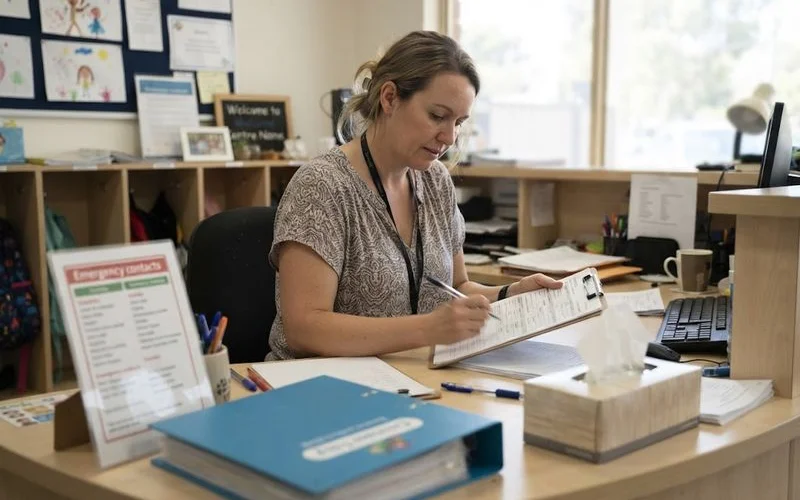
Prepare a short, clear document covering your child’s daily routine, any medical conditions, allergies or medication needs, emergency contacts beyond yourself, and anything specific a new carer should know (favourite comfort items, words they use for the toilet, anything that helps them settle quickly). Keep a copy somewhere easy to find and update it as your child grows, since a one-year-old’s needs look very different a year later.
What backup or emergency care typically costs
Expect casual and short-notice bookings to cost more per hour than a regular, ongoing daycare place, often with a minimum booking length even for a short window, and additional loadings for evenings, weekends, overnight or public holidays. Ask for the full rate card, not just the headline hourly figure, when you register, so there are no surprises if you need to use it in a hurry.
Layering more than one option
A single backup plan can still fail you if that specific provider is unavailable on the day you need them. Where possible, layer a registered agency alongside an informal option, a trusted friend, neighbour or family member who could step in for a short window, so you have a second path if the first one does not come through.
A short trial run before you actually need it
If you have registered with an emergency care agency, consider booking a short, low-stakes session before an actual emergency arises, even just a couple of hours on a weekend. This lets your child meet a carer from the agency in a relaxed setting, gives you a feel for how the agency actually operates in practice, and means the first time your child meets an emergency carer is not also the first time you are relying on them under pressure. The same instincts that help with settling a baby or toddler into ongoing care apply here: a short, low-pressure first meeting beats a cold start. Not every family can justify the cost of a trial run, but if your budget allows it, it removes one layer of stress from a genuinely stressful situation.
Reviewing the plan as your family changes
A backup plan that worked well when your child was an infant may need adjusting as they grow, start school, or develop specific needs an emergency carer should know about. Revisit your information sheet and your registered providers every six months or so, particularly around the start of a new school year, to make sure the details are still accurate and the arrangement still fits your family’s current situation. If your backup needs shift toward covering school holidays and vacation care once your child starts school, that is worth planning for separately, since booking windows and waitlists work differently there.
Getting started
Browse the 24-hour and emergency care category to compare Perth providers on vetting standards and responsiveness, and see our methodology for exactly how those scores are calculated. If you need care today rather than a plan for next time, our same-day emergency child care service connects you directly with providers who can help right now. Registering with one now, before you need it, is the single most useful step in this whole plan.
Questions people ask
- Do I need to register with an emergency care agency before I actually need them?
- Many agencies strongly prefer this, and some will not take a genuinely short-notice booking from a family they have never dealt with. Registering in advance, even without booking anything, means your details are already on file when you actually need care.
- What information should I have ready in advance?
- Your child's routine, any medical or allergy information, emergency contacts, and a note of anything a new carer would need to know quickly. Having this written down once saves scrambling to explain it during an actual emergency.
- How much does backup or emergency care typically cost compared to regular bookings?
- Expect a higher hourly rate than a standard daycare place, often with a minimum booking length and possible loadings for evenings, weekends or overnight, since you are paying for flexibility and short notice rather than a pre-booked ongoing place.
- Is one backup option enough?
- It is worth having more than one, if you can. A single backup agency or carer can also be unavailable when you need them, so a second option, even an informal one like a trusted friend or family member, adds real resilience to the plan.