
Helping your child move from kindy to primary school in WA
By Farah Vogel · Updated 2026-07-09
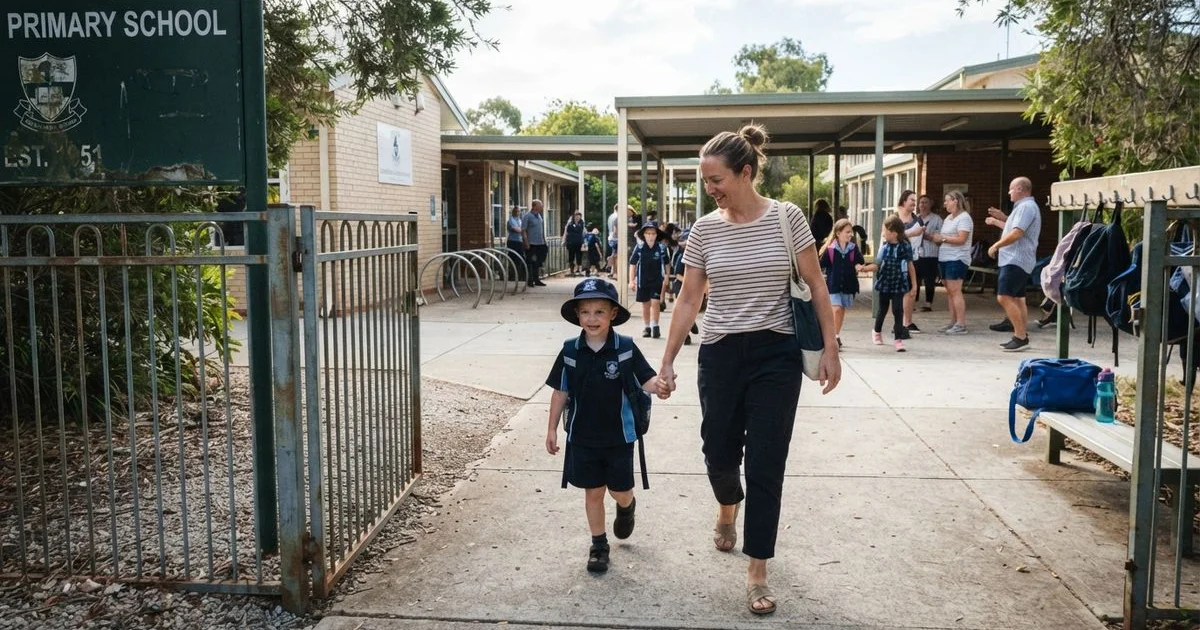
The move from a child care or kindy setting into pre-primary and formal schooling is one of the bigger transitions a Perth family navigates, both logistically and emotionally. Understanding what actually changes makes it easier to prepare your child, and yourself.
What changes day to day
Child care and kindy settings generally offer flexible hours and a play-based, less formally timetabled day. Pre-primary, delivered within a primary school, runs to the school’s set hours and calendar, with a more structured routine built around the school day. If you are still weighing a standalone kindy program against a long day care centre with kindy built in for the year before this transition, our kindergarten vs long day care guide covers that decision in more depth. For many families, this is the first time drop-off and pick-up times are fixed rather than flexible, which can mean arranging before and after school care to cover the gap around work hours.
| Kindy / child care | Pre-primary / school | |
|---|---|---|
| Hours | Often flexible, some sessional | Fixed, tied to the school day |
| Setting | Child care centre or standalone kindy | Primary school campus |
| Routine | Play-based, less formally timetabled | More structured, school calendar and terms |
| Before/after coverage | Often built into centre hours | Usually needs separate OSHC arrangement |
Preparing your child
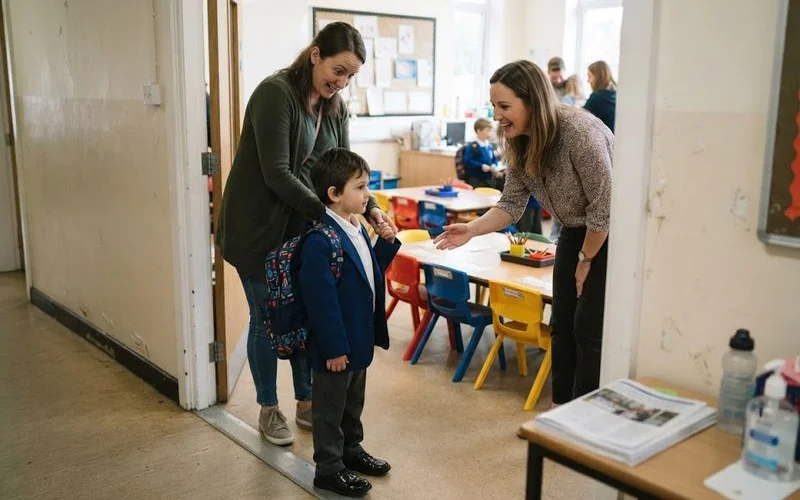
Children generally adjust well to a new setting when the change feels familiar rather than sudden. Simple things help: talking through what a school day will look like, practising the morning routine and school run ahead of time, and if the school allows it, visiting the grounds and classroom before the first day. Consistency in the weeks around the transition, rather than introducing lots of other changes at once, tends to smooth the adjustment.
Preparing yourself for the logistics
The practical side often takes more planning than the emotional side. Work out your before and after school care needs early, since popular OSHC programs at some schools can have waitlists, particularly in the first term of the school year. If your current child care provider also runs an OSHC program, ask whether enrolled families get priority for a place, which can simplify the transition considerably.
What to expect emotionally
Some children move into pre-primary without a backward glance; others take longer to settle, particularly if they are leaving behind a familiar centre and educators they have known for years. Both are normal. If your child seems unsettled beyond the first few weeks, a conversation with the classroom teacher is the right first step, since they see your child in the new setting every day and can flag anything worth watching.
What parents find harder than expected
It is not always the child who finds the transition tricky. Losing daily photo updates and detailed handover conversations that many child care centres provide can leave parents feeling less connected to their child’s day once school starts, since primary schools generally communicate less frequently and in less detail than a child care app. Knowing this in advance helps: ask the school what communication to expect, whether that is a weekly newsletter, a portal, or simply relying on your child to tell you about their day, and adjust your expectations accordingly rather than assuming something has gone wrong if updates are sparser than you are used to.
Choosing a school and enrolling on time
If you have not already settled on a primary school, start that process well before the pre-primary year, since popular schools, particularly those with strong local reputations or those outside your default catchment zone, can have enrolment deadlines and priority given to local intake areas. Confirm your catchment school and enrolment timeline directly with the Department of Education or the specific school, since requirements and deadlines can differ between schools and are updated from time to time.
Keeping perspective
Every child adjusts on their own timeline, and starting kindy or pre-primary a little earlier or later, or having attended a different mix of care types beforehand, does not set a fixed trajectory. If you are still finalising your kindergarten and preschool choice for the year before school, our methodology explains how we score providers if you want an independent view alongside your own visits.
Questions people ask
- What is the difference between kindy and pre-primary?
- Kindy is generally the year before pre-primary and is not compulsory, while pre-primary is a compulsory school year in WA. Both are play-based and structured around similar early learning outcomes, but pre-primary is delivered within a primary school setting.
- Will my child be behind if they did not attend kindy?
- Not necessarily. Pre-primary teachers are experienced at meeting children where they are, whatever their prior experience. If you have specific concerns, raise them directly with the pre-primary teacher early in the year rather than assuming a gap exists.
- How different is the daily routine at school compared to child care?
- Quite different in structure: set start and finish times tied to the school day, a more formal timetable, and less flexibility around drop-off and pick-up than most child care settings allow. Before and after school care can help bridge the gap if you need coverage outside school hours.
- What can I do at home to help the transition?
- Simple, consistent routines help more than formal preparation: practising the school run, talking through what a school day looks like, and visiting the school grounds before the first day if the school allows it.
Related on this site
- Browse kindergarten & preschool programs providers
- Best kindergarten & preschool programs in Perth Metropolitan →
- Kindergarten vs long day care: which is right for your child
- Returning to work after parental leave: choosing child care that fits
- Child care for kids with additional needs in Perth: getting started
- All guides →