
Family day care vs a long day care centre: how to choose
By Farah Vogel · Updated 2026-06-18
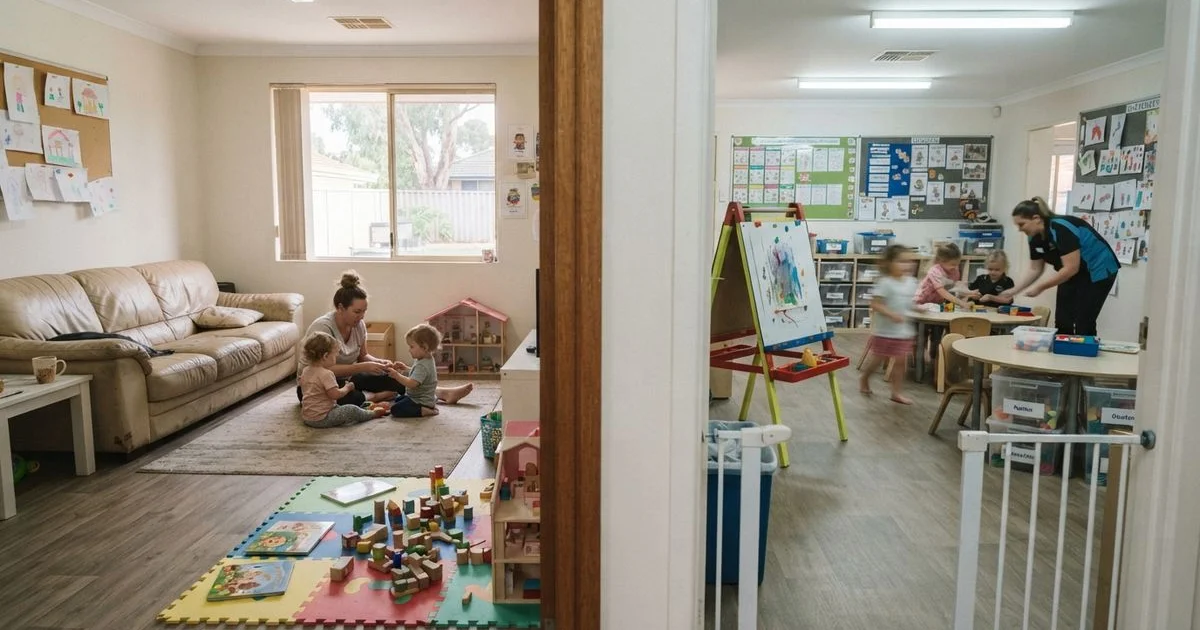
Family day care and long day care both offer regulated, full-day child care in Perth, but the setting and feel are genuinely different. Neither is objectively better; the right choice depends on what your child and your family need.
What actually differs
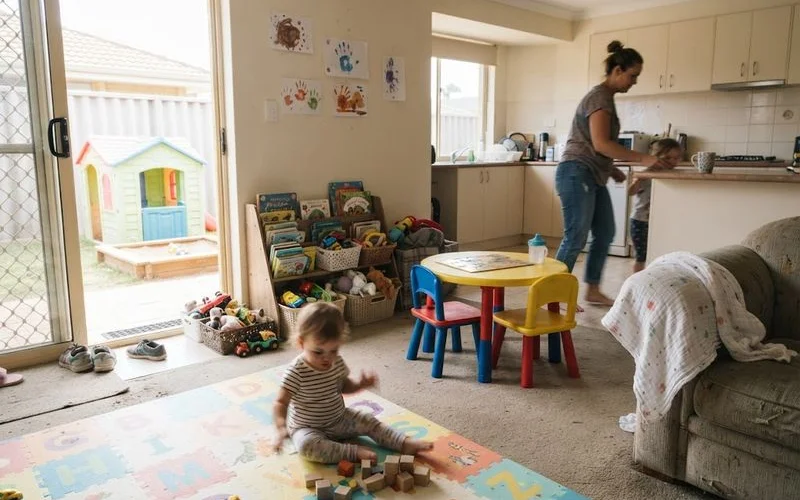
A long day care centre operates from a purpose-built facility, with multiple rooms grouped by age, a larger staff team, and a set daily program. Family day care happens in an educator’s own home, with a small, mixed-age group of children under the direct care of one qualified educator, operating under an approved family day care service that recruits and oversees them.
| Family day care | Long day care centre | |
|---|---|---|
| Setting | Educator’s home | Purpose-built centre |
| Group size | Small, mixed ages | Larger, grouped by age |
| Consistency of carer | Same educator most days | Rotates across a staff roster |
| Facilities | Home-based, varies by educator | Dedicated play areas, often larger outdoor space |
| Typical cost | Generally lower | Generally higher |
Why families choose family day care
A smaller, home-like setting suits children who settle better in a quiet, familiar environment than a larger group. Because your child sees the same educator most days rather than a rotating roster, some families feel this builds a closer, more consistent bond, particularly useful for infants and toddlers still adjusting to being away from a parent. Mixed-age groups also mean siblings can often stay together rather than being split into separate age-based rooms.
Why families choose a long day care centre
A centre offers more structure, a bigger facility, and often broader resources: dedicated outdoor play areas, a kitchen preparing meals for the whole centre, and a wider range of equipment and activities than a single home can typically match. If a staff member is away sick, a centre has a larger team to draw on, which some families find more reassuring than a single-educator model. Centres also tend to offer a clearer path into an in-house kindergarten program as your child approaches school age.
What to check with either option
- Current registration and approval status with the relevant family day care service or the centre’s approved provider.
- Staff-to-child or educator-to-child ratios for your child’s specific age group.
- What happens on a sick day: is there backup care, and how is it arranged?
- How settling-in visits work before your child’s first full day.
- What is included in the daily fee versus charged separately.
Making the call
If your child is anxious in large groups, or you want the same familiar face most days, family day care is worth prioritising in your search. If you want a bigger facility, more built-in backup if a carer is away, and a clear path into an in-house kindergarten program, a centre may suit better. Many families also make the decision on logistics: which option is closer to home or work, and which has an opening when you need it.
Siblings and mixed ages
If you have more than one child under school age, family day care’s mixed-age setting can be a genuine advantage: siblings often stay in the same room with the same educator rather than being split across separate age-based rooms in a centre. This can simplify drop-off and pick-up to one conversation with one educator, rather than checking in at two or three different rooms. Some families weigh this heavily enough on its own to choose family day care even when a centre would otherwise be their first pick.
What happens as your child grows
Family day care generally suits infants and toddlers particularly well, given the small group and close one-on-one attention. As children approach kindergarten age, some families move them into a centre with a structured kindergarten program, either because they want a bigger peer group before school or because their family day care educator does not offer that specific program. This is not a sign the family day care choice was wrong; it is simply a natural point where needs shift as a child gets older. If this is likely to matter to you, ask a prospective family day care educator directly what happens as your child approaches school age, and whether they support a transition into a centre-based kindergarten program when the time comes.
Compare specific providers in the family day care category once you have a sense of which setting fits, and read our methodology for how those rankings are calculated.
Questions people ask
- Is family day care regulated the same way as a centre?
- Yes. Family day care educators in WA operate under the same National Quality Framework as centres, through an approved family day care service that recruits, supports and monitors them, even though the care itself happens in the educator's home.
- How many children does one family day care educator look after?
- Ratios are set by regulation and vary with the ages of the children in the educator's care, generally capping the group at a small number so it stays genuinely home-like rather than centre-sized.
- What happens if my family day care educator is sick?
- A good family day care scheme has a backup plan, either another registered educator nearby or a relief arrangement coordinated through the service. Ask about this before enrolling, since it varies between providers.
- Can I switch between family day care and a centre later?
- Yes, many families do, often moving a child from family day care into a centre-based kindergarten program in the year or two before school, once they want a more structured group setting.